
Hexagonal Wire
Mesh: Uses, Sizes, and Applications in India
Choosing the right hexagonal wire mesh
for a poultry enclosure, gabion wall, or landscaping project comes down to
matching wire gauge and opening size to the job. Get it wrong and you end up
with mesh too flimsy to hold a gabion's stone fill, or too heavy and expensive
for a simple chicken coop. This guide walks contractors, poultry farmers,
landscapers, and industrial buyers across Mumbai and India through hexagonal
wire mesh sizes, gauges, and applications, so you can order the correct grade
the first time.
Arihant Fence has manufactured hexagonal
wire mesh for over 30 years from our Vasai East facility, supplying farmers,
contractors, and infrastructure projects across Maharashtra and beyond.
Everything below reflects what we actually see specified and installed on-site,
not generic catalogue copy.
What Is Hexagonal Wire Mesh?
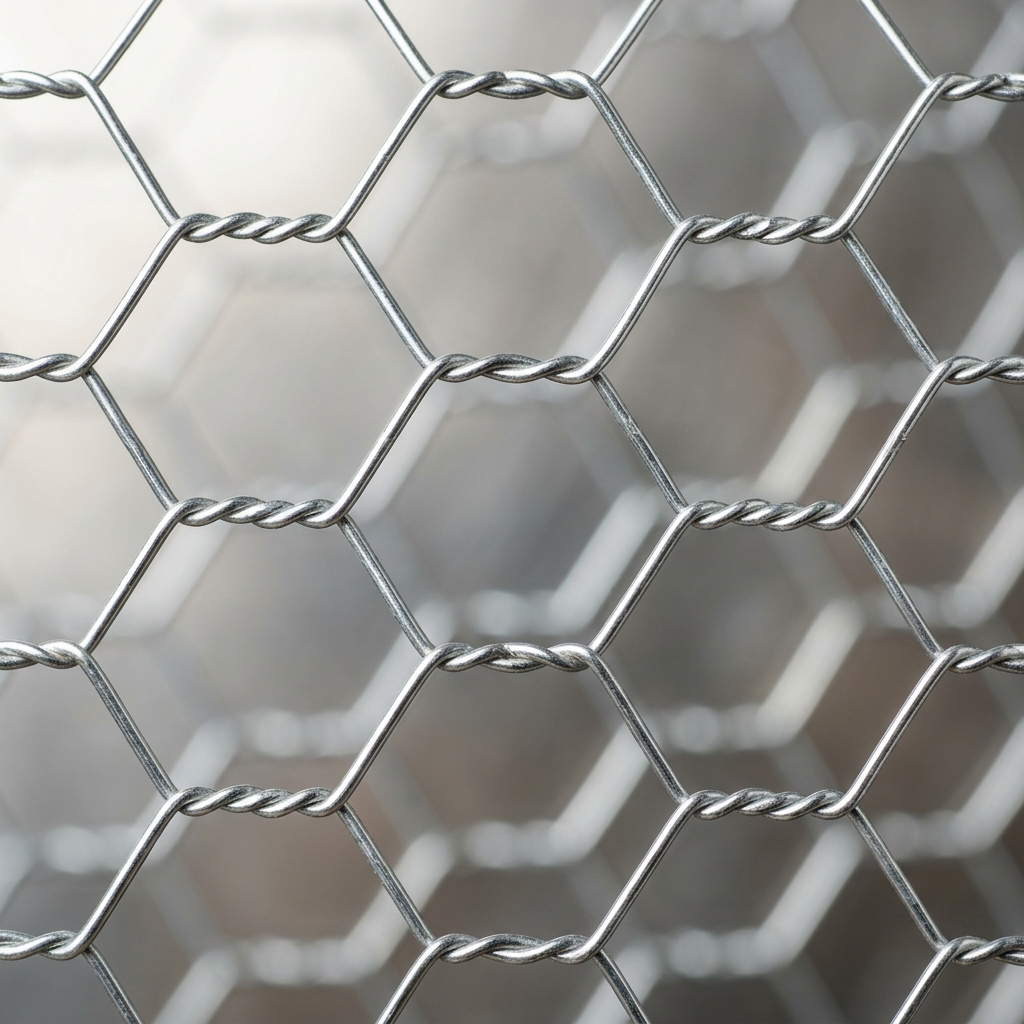
Hexagonal wire mesh — also called chicken
wire, poultry netting, or hex netting — is made by twisting galvanized wire
into a honeycomb of hexagonal openings, then weaving it into rolls. Unlike
welded mesh, the wires aren't fused; each hexagon is formed by continuous
twisting, which gives the mesh flexibility to wrap around curved frames, cages,
and gabion baskets without cracking or snapping at the joints.
This flexibility is exactly why hexagonal
wire mesh uses span such a wide range: light poultry fencing, garden and
tree-guard netting, plastering reinforcement, and heavy-duty gabion baskets for
retaining walls and erosion control all use the same basic weave, just in
different gauges and opening sizes.
Hexagonal Wire Mesh Sizes and Gauge Chart
Hexagonal wire mesh sizes are defined by
two numbers: the hexagon opening size (measured across the widest point) and
the wire gauge (thickness). Here's a practical hexagonal wire mesh gauge chart
covering what's commonly available in India:
●
Light gauge (22–24 SWG,
~0.56–0.71 mm wire): Fine mesh openings of 10–15 mm,
used for plastering reinforcement, small animal enclosures, and decorative
garden fencing.
●
Medium gauge (19–21 SWG,
~0.9–1.1 mm wire): Openings of 20–25 mm (roughly
3/4" to 1"), the standard for poultry wire mesh sizes used in coops,
aviaries, and rabbit hutches.
●
Heavy gauge (12–16 SWG,
~1.6–2.7 mm wire): Larger openings of 60–100 mm, used
for gabion baskets, erosion control, and structural retaining applications
where the mesh needs to hold heavy stone fill under continuous load.
For construction and industrial buyers,
always confirm both numbers together — a supplier quoting only "22
gauge" or only "1-inch mesh" hasn't given you a complete
specification.
Hexagonal Wire Mesh for Poultry: Chicken Mesh Wire
Specifications
Poultry wire mesh sizes need to balance
two things: keeping birds contained and predators out, while staying light
enough to handle and afford in bulk. Standard chicken mesh wire specifications
in India typically use 19–22 gauge GI wire with a 20–25 mm hexagonal opening,
galvanized after weaving (GAW) for rust resistance. GAW galvanizing is worth
specifying by name, since it coats the wire after the twisting process is
complete, sealing the cut ends and joints that plain pre-galvanized wire leaves
exposed to moisture.
For larger poultry runs or commercial
farms, a heavier 18-gauge hexagonal wire mesh option with the same opening size
adds durability against digging predators without a major cost jump.
Hexagonal Wire Mesh Coating: GI Wire Netting for Corrosion
Resistance
GI hexagonal wire netting — galvanized
iron mesh — is the default choice for nearly all outdoor hexagonal wire mesh
applications in India, because plain steel corrodes quickly in monsoon and
coastal humidity. Look for a zinc coating rate above 350 g/m² for mesh that
will stay outdoors year-round; lighter coatings are acceptable only for
temporary or indoor use.
Galvanized hexagonal wire mesh
application extends well beyond farming. Contractors use GI hex mesh for
splinter-proof glass backing, light plastering reinforcement on curved
surfaces, tree guards, and temporary construction site fencing where a rigid welded
panel isn't necessary. For heavier structural galvanizing needs, our galvanized wire mesh manufacturing page covers
coating specifications across our full mesh range. If your project instead
needs a rigid, load-bearing panel rather than flexible netting, our welded wire mesh specifications guide covers
that comparison in detail.
Hexagonal Wire Mesh for Gabion: Sizing for Structural Loads
Hexagonal wire mesh for gabion
applications is a different category entirely from poultry or garden netting.
Gabion baskets — wire mesh cages filled with rock to build retaining walls,
riverbank protection, and road embankments — need heavy-gauge mesh (typically
8–10 gauge, roughly 3.25–4.0 mm wire) with a larger 60 mm x 80 mm or 80 mm x
100 mm hexagonal opening to hold significant stone weight without deforming.
Double-twisted weave is standard for
gabion-grade hexagonal wire mesh, since it resists unraveling if a single wire
is cut or damaged during filling or after installation — a critical safety
factor for retaining wall applications where structural failure has real
consequences. For full gabion basket specifications and sizing, see our gabion box manufacturing page.
Hexagonal Wire Mesh Price in India: What Affects Cost
Hexagonal wire mesh price in India
depends primarily on three factors: wire gauge, zinc coating weight, and order
volume. As a general guide:
Light-gauge poultry and garden mesh sits
at the lower end of the price range, since it uses less steel and standard
galvanizing. Heavy-gauge gabion mesh costs considerably more per square meter
due to thicker wire and, often, PVC coating for additional corrosion protection
on erosion-control projects. Bulk orders direct from a manufacturer — rather
than through a distributor — typically bring meaningful savings, since
factory-direct pricing removes trading margins.
For an accurate quote, always specify
your exact gauge, opening size, and roll dimensions rather than asking for a
generic price, since "hexagonal wire mesh" alone covers a price range
wide enough to be meaningless for budgeting.
Choosing the Right Hexagonal Wire Mesh for Your Project
Work through this sequence when
specifying hexagonal wire mesh for any application:
- Identify the load requirement — light
containment (poultry, garden) versus structural (gabion, retaining walls)
determines your gauge range immediately.
- Confirm
opening size against what needs to be contained
or held — smaller animals and stone fill both need tighter openings than
general fencing.
- Specify
GAW galvanizing and a zinc coating rate for any
outdoor or Mumbai coastal-climate application.
- Request roll dimensions that match your
site or cage layout to minimize on-site cutting and wastage.
If your project also needs a broader
boundary or agricultural fencing solution alongside hexagonal mesh, our industries
page for agricultural boundaries outlines complementary fencing
systems we supply.
Why Choose a Mumbai-Based Hexagonal Wire Mesh Manufacturer
Sourcing from a hexagonal wire mesh
manufacturer Mumbai-based rather than an out-of-state supplier cuts freight
cost and lead time significantly, particularly for bulk agricultural or gabion
orders where roll weight makes long-distance shipping expensive. Arihant Fence
manufactures directly from our Vasai East facility, giving farmers,
contractors, and landscapers across Mumbai, Thane, and greater Maharashtra
faster dispatch and factory-direct pricing. Browse our complete fencing and
mesh range on the Arihant Fence home
page.
Frequently Asked Questions
What gauge hexagonal wire mesh is best
for a poultry coop?
19–22 gauge GI
hexagonal mesh with a 20–25 mm opening is standard for poultry coops — light
enough to handle easily while keeping birds secure and predators out.
Can hexagonal wire mesh be used for
gabion baskets?
Yes, but only
heavy-gauge (8–10 gauge) double-twisted hexagonal mesh with larger openings is
suitable — standard poultry-grade mesh is far too light for structural gabion
loads.
What's the difference between
hexagonal and welded wire mesh?
Hexagonal mesh
is twisted and flexible, suited to curved surfaces and light containment.
Welded mesh is rigid with fused joints, suited to panels, walls, and
reinforcement where flatness matters.
Does hexagonal wire mesh rust in
Mumbai's climate?
Properly
GAW-galvanized mesh with a 350 g/m²+ zinc coating resists rust well through
Mumbai's humid, coastal conditions. Lower-coating or non-galvanized mesh will
corrode faster.
What size roll should I order for a
boundary fence?
Standard rolls
run in common widths and lengths, but confirm your exact site perimeter and
post height with your supplier to minimize joins and offcut wastage.
Get Expert Help Selecting the Right Hexagonal Wire Mesh
Whether you're fencing a poultry farm,
building a gabion retaining wall, or sourcing bulk mesh for a construction
site, Arihant Fence's team can recommend the correct gauge and opening size for
your application and budget.
Visit Factory: Agarwal Industrial Estate, Unit 1, Plot No. 3, Sativali Kaman Road,
Valiv, Vasai East, Thane, Pin – 401208, Maharashtra, India
Call: +91 93222 90173